In Wake Up Dead Man, master detective Benoit Blanc is drawn into a deeply unsettling mystery when Monsignor Jefferson Wicks, the charismatic priest of a small church in the fictional town of Chimney Rock, dies in a spectacular and puzzling way: he walks into a sealed concrete box during a sermon and seconds later is found lying motionless inside. The circumstances of his death feel almost miraculous, and Blanc must unravel a web of faith, power, and deception to find the truth.
Blanc arrives in the parish where he meets Father Jud Duplenticy, a young priest newly assigned to this church. Their relationship is fraught: Jud is earnest and driven by his own secret guilt, while the late Monsignor Wicks ran a tight, emotionally charged congregation. Duplenticy is haunted by his past—he once was a boxer and carries the weight of a tragedy that pushed him into the cloth. As Blanc digs into the mystery, he realizes that this case is more than a simple murder—it’s a spiritual crisis wrapped in a crime.

The church’s atmosphere is thick with tension: Wicks used shame as a tool in his preaching, and many worshippers followed him devoutly, complicit in his charisma. When Jud learns of Wicks’s death, he’s forced to question not only his faith but also the true nature of his mentor’s influence. Blanc, meanwhile, views the situation with his characteristic combination of southern charm and sharp insight, recognizing that what appears miraculous may hide a far more sinister human motive.
As Blanc navigates the parish’s dark history, he encounters a cast of characters with their own secrets and agendas. The town is full of believers, doubters, and those who used Wicks’s power for personal gain. The investigation reveals that Wicks’s legacy was built not just on faith but also on oppression, manipulation, and something deeply personal to Jud that could unravel everything.
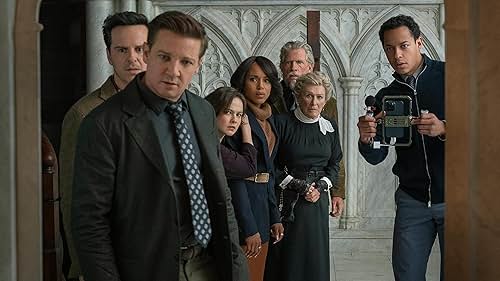
Throughout the case, Blanc is tested not only as a detective but as a moral arbiter. Rian Johnson, the writer-director, has said that this film is Blanc’s “most personal journey yet,” exploring themes of guilt, belief, and fallible humanity in a gothic, almost Poe-like setting. The church’s architecture, graveyards, and the stormy atmosphere mirror the moral weight of the mystery, making the crime feel as existential as it is criminal.
Eventually, Blanc and Jud confront a stunning truth: Wicks’s death was not supernatural but expertly staged, part of a larger scheme tied to the priest’s influence and his congregation. By exposing the lie, Blanc frees more than just a murderer—he frees a community from the grip of fear and false holiness. The resolution is bittersweet: the crime is solved, but the wounds of faith and shame run deep.
In the end, Blanc departs the town with a deeper understanding of the human heart and the power of belief. Jud, transformed by the ordeal, is left to rebuild his faith on more honest terms. Wake Up Dead Man shows that even the most “perfectly impossible” crime can hide very human motives—and that redemption often comes at the cost of confronting hard truths.


